

A shared direction
Know what matters, and who is moving it forward.
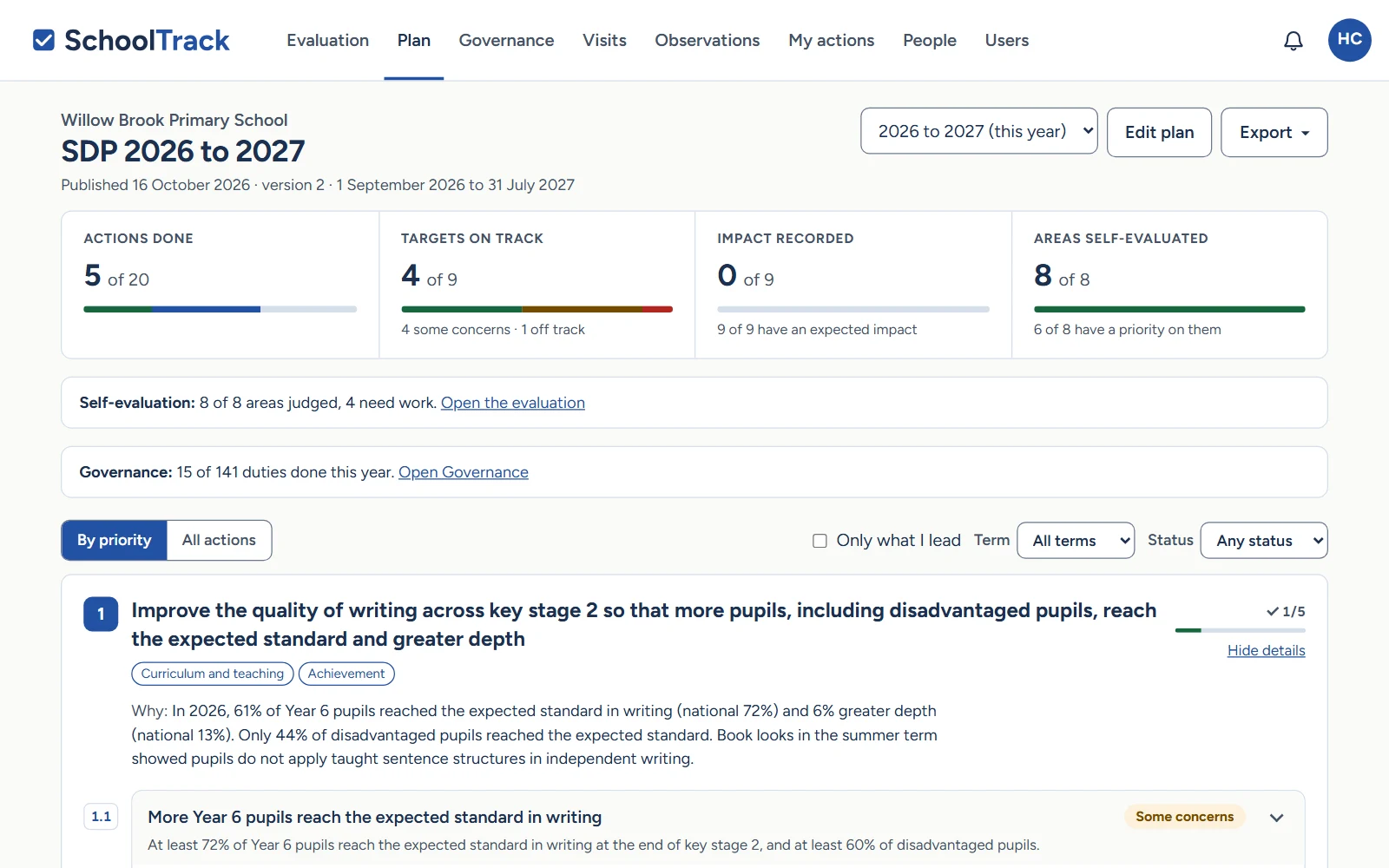
A plan is useful when it supports the next decision. See priorities, named leads and progress together, with the expected impact on pupils kept in view.
For headteachers and senior leadership teams
Turn shared priorities into work people can follow. See where support is needed, bring evidence into the conversation and adapt your approach as the year unfolds.
A shared direction
A plan is useful when it supports the next decision. See priorities, named leads and progress together, with the expected impact on pupils kept in view.
Earlier conversations
A short update puts a concern in context. Leaders and governors can understand what has changed and discuss the response, rather than wait for the end-of-year review.
Follow the school year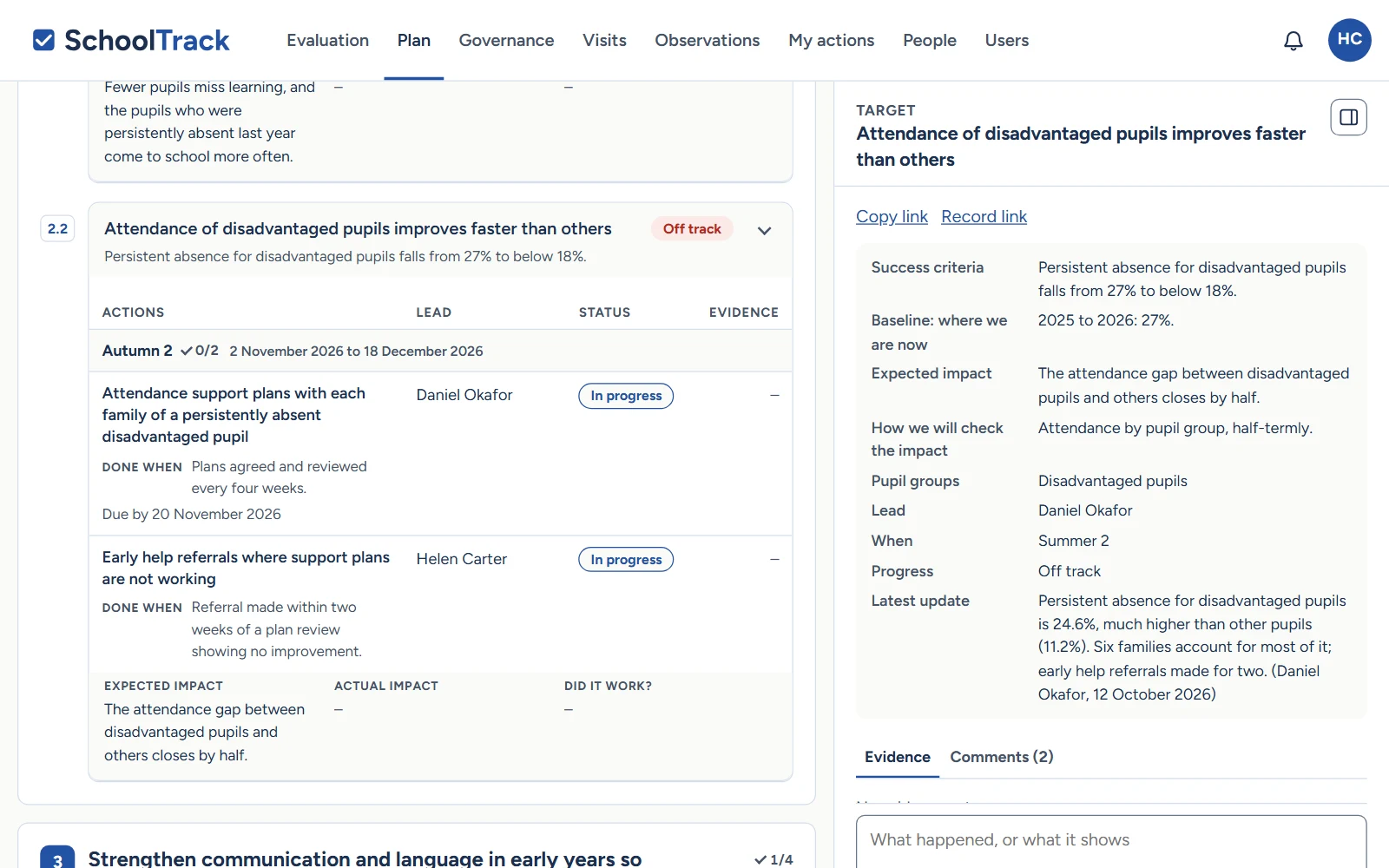
Evidence with a purpose
Connect monitoring notes, documents and links to the priority they inform. When you discuss progress, the supporting information is already in context.
See how evidence informs a review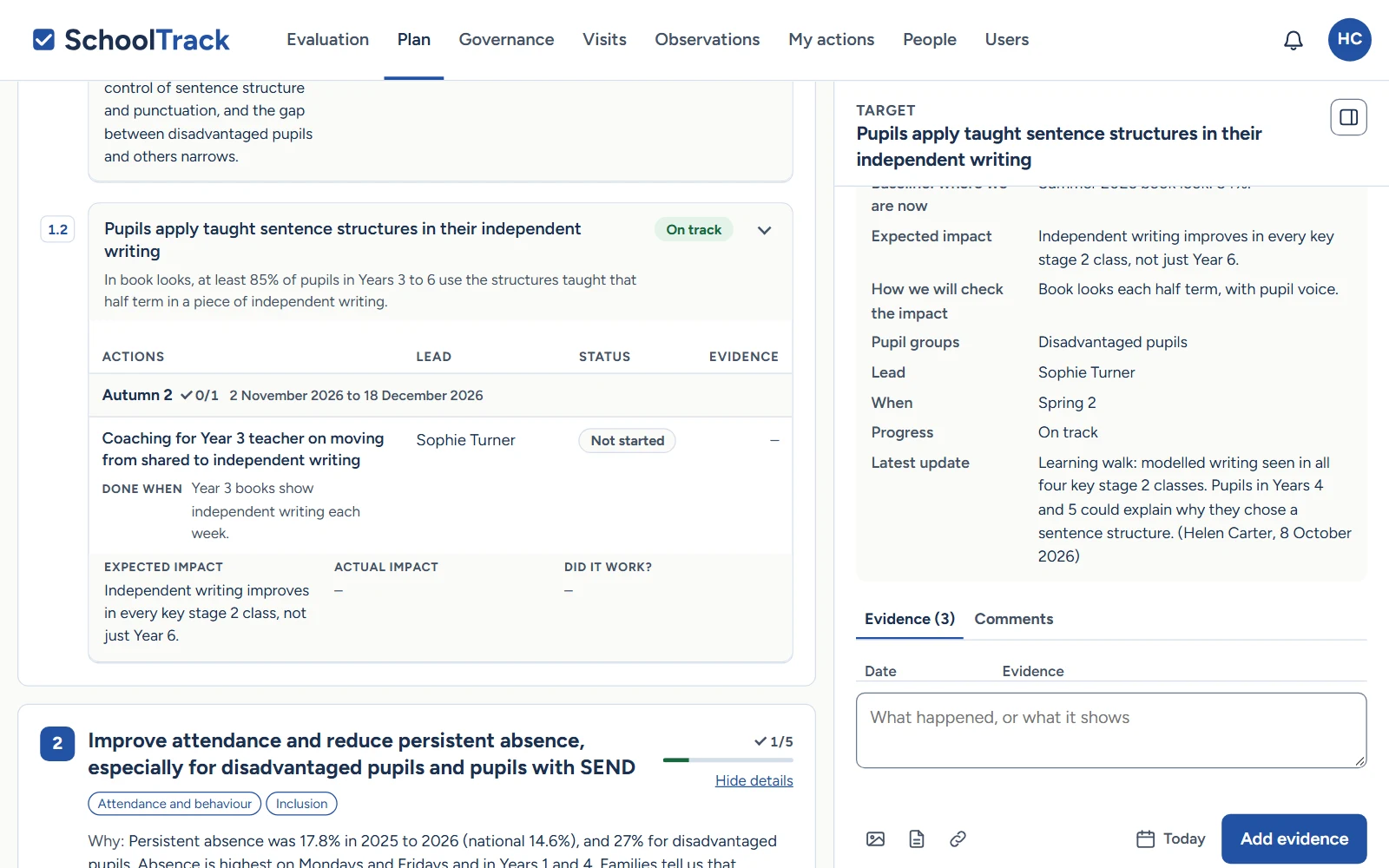
An honest view of the school
Bring self-evaluation answers and evidence together. SchoolTrack’s assessment supports discussion; leaders can record their own judgement and explain their reasons.
Read about the guidance behind SchoolTrack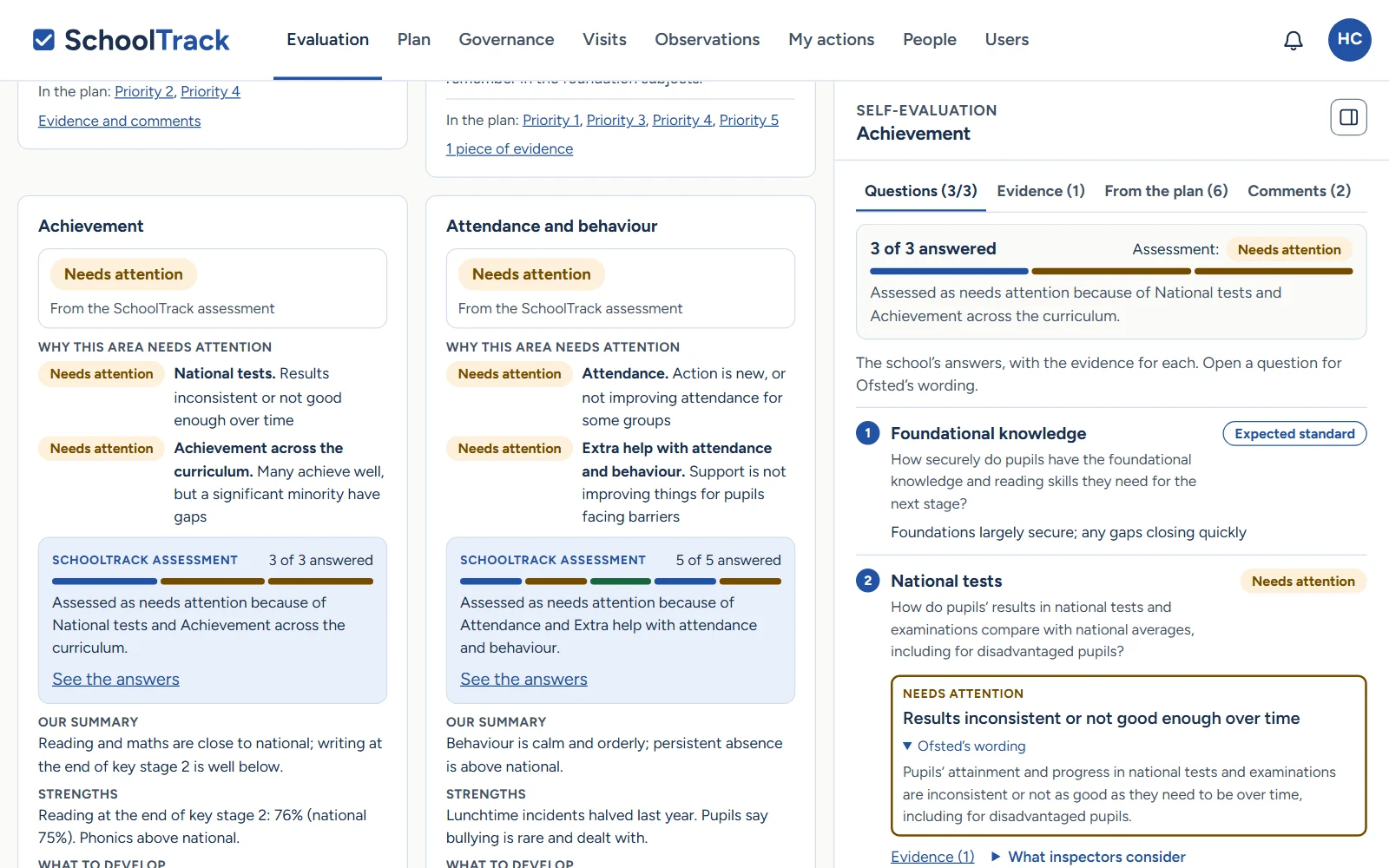
Support for teaching
Record observations without lesson grades, connect next steps to the work and follow up what is seen in practice. Access depends on the observation and the person’s role.
Read about staff access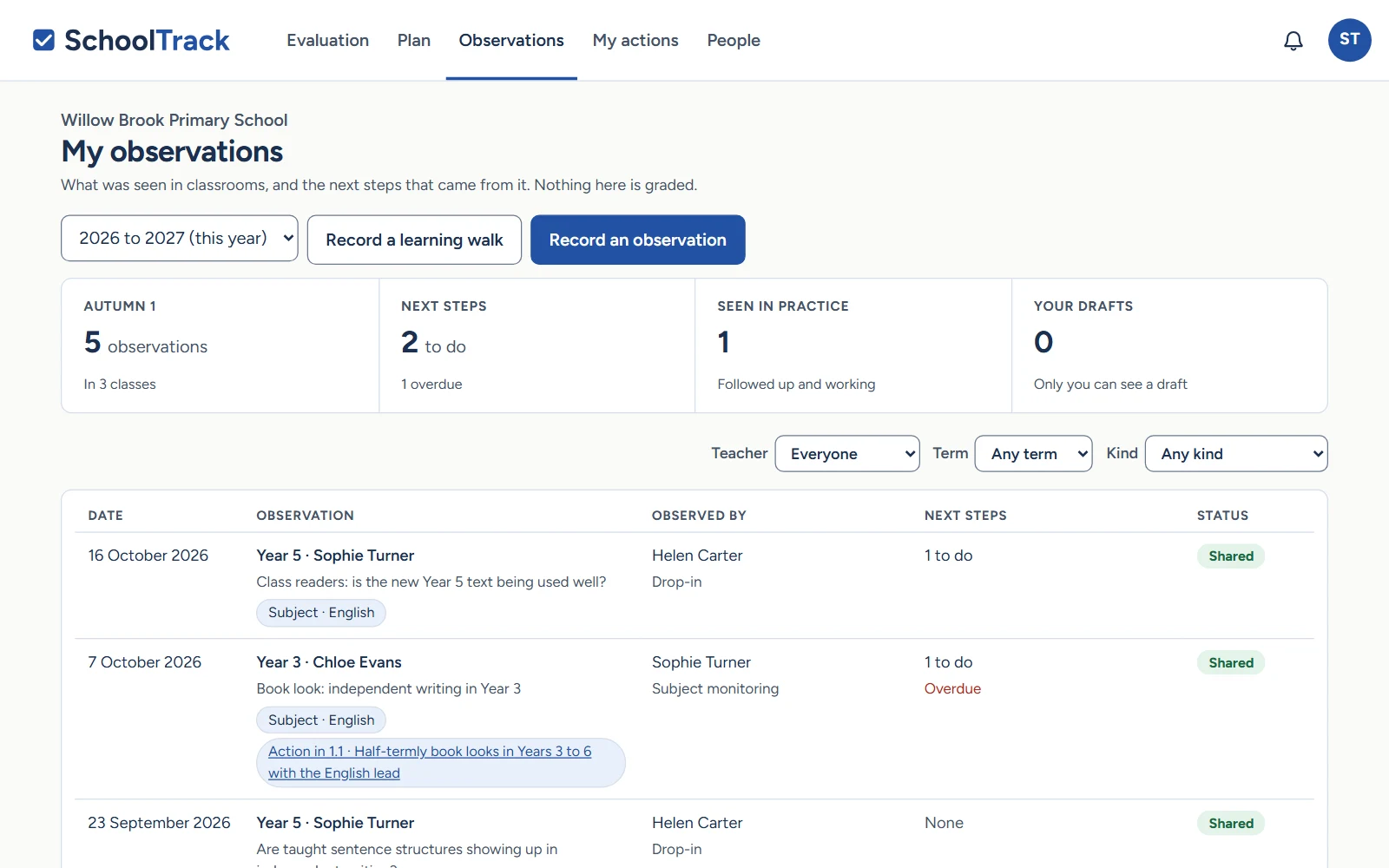
For teachers and school staff, too
Everyone with access to the school development plan can read its published version. Named leads can add evidence to the work they lead. My actions brings together the actions and responsibilities a person is named on.
Teaching staff can see observations shared with them, add reflections and follow up next steps. Observation access has its own boundaries: governors see a summary without names, rather than individual teaching records.
The headteacher manages school roles and permissions. Read how access works.
Register your school for us to check and set up, or get in touch to talk through what you need.
How registration and setup work